MERN / MEAN Full Stack
Build modern web apps using React/Angular, Node.js, Express, MongoDB, REST APIs, and real deployment pipelines.
What you'll use in every class
Industry tools covered in training, projects, and placement preparation.
MERN Stack Learning Roadmap
MongoDB, Express, React, Node — see the full stack JavaScript path to your first job.
Learn the skills companies ask in interviews
Each module builds toward projects, resume confidence, and interview answers.
HTML, CSS & JavaScript Foundations
- HTML5 semantic elements, forms, accessibility, and SEO basics
- CSS3 — Flexbox, Grid, animations, custom properties, and media queries
- Bootstrap 5 — component library, utility classes, and responsive grid
- JavaScript core — variables, functions, closures, scope, and prototype chain
- ES6+ features — arrow functions, destructuring, spread, modules, template literals
Advanced JavaScript & Async Programming
- DOM manipulation — selectors, events, event delegation, virtual DOM concept
- Asynchronous JS — callbacks, Promises, async/await, and error handling
- Fetch API and Axios — making and handling HTTP requests
- JavaScript design patterns — module, factory, observer
- TypeScript basics — types, interfaces, and type safety for React projects
React.js Frontend Development
- React fundamentals — JSX, functional components, props, and state
- Hooks — useState, useEffect, useRef, useContext, and custom hooks
- React Router v6 — SPA navigation, nested routes, protected routes
- State management with Redux Toolkit — actions, reducers, thunks
- Performance optimization — React.memo, useMemo, lazy loading
Node.js & Express.js Backend
- Node.js core modules — fs, path, http, EventEmitter, streams
- Express.js — routing, middleware stack, error handling, static files
- RESTful API design — CRUD operations, HTTP status codes, best practices
- JWT authentication — user login, token generation, refresh token flow
- Input validation with Joi/express-validator, CORS, and security middleware
MongoDB & Mongoose ODM
- MongoDB fundamentals — documents, collections, CRUD, and operators
- Mongoose schema design — types, validation, default values, virtuals
- Database relationships — embedded documents vs population (references)
- Aggregation pipeline — $match, $group, $lookup for reporting queries
- MongoDB Atlas setup, indexing strategies, and connection management
Full Stack Integration, Deployment & Placement Prep
- Connecting React frontend to Node/Express REST API end-to-end
- JWT-based auth flow — login, protected routes, token storage best practices
- File uploads — Multer on backend, drag-and-drop preview on React
- Git workflow — feature branches, PRs, code reviews for team projects
- 3 full-stack MERN projects for portfolio, mock interviews, and resume prep
Projects students can show during interviews
Event Registration & Attendance Tracker App
Event domain with real user flows — easy to walk through in an interview.
Hostel Mess Menu & Daily Billing App
College domain — specific and believable, shows full MERN stack end-to-end.
Freelancer Work Portfolio Builder
Shows file upload, auth and CRUD — three things every MERN interviewer checks.
Job Application Status Tracker
Students relate to it, interviewers respect the domain — Redux state management focus.
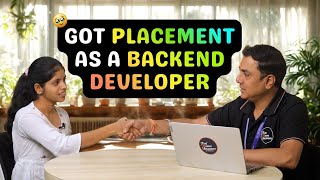
25,000+ students placed — here's a few
These are actual placements from The Kiran Academy — verified and updated regularly.




































Our students are working at






























Your first class is free.
Attend a demo session before you decide. No obligation, no fees — just learning.
Common student doubts
Short answers for course, placement, and project expectations.
MERN Stack is a combination of four JavaScript technologies: MongoDB (NoSQL database), Express.js (backend framework), React (frontend library), and Node.js (JavaScript runtime). Together they allow you to build complete web applications using only JavaScript — from the database to the browser. MERN is popular with startups and product companies for its speed and flexibility.
Yes — JavaScript Full Stack roles (MERN/MEAN) are among the fastest-growing in the industry, especially at product startups, SaaS companies, and e-commerce platforms. React alone has become the dominant frontend framework with 60%+ market share. Companies building new web products in 2025 overwhelmingly choose React + Node.js over older stacks.
Fresher MERN developers in Pune typically earn ₹4 to ₹7 LPA. Product companies and startups with JavaScript stacks often pay more than IT services companies. With 1–2 years of experience, MERN developers commonly reach ₹8–15 LPA. React developers with strong component architecture and state management skills (Redux, Context API) are particularly in demand.
No. MERN Stack uses JavaScript throughout — frontend and backend. You do not need prior knowledge of Java or Python. However, you should be comfortable with logical thinking and basic programming concepts. Our MERN course starts from JavaScript fundamentals before moving to React and Node.js. Students who already know some JavaScript will find the early weeks easier.
Both are JavaScript full stack combinations using the same M (MongoDB), E (Express.js), and N (Node.js). The difference is the A vs R: MEAN uses Angular (Google), MERN uses React (Meta). React is currently more popular in the job market with higher adoption among startups. Angular is more common in enterprise software. Our MERN course focuses on React, which has broader fresher hiring demand.
Our MERN and React students have been placed at product startups, SaaS companies, and IT services firms across Pune, Bangalore, Hyderabad, and remote-first companies. JavaScript Full Stack roles are especially common at companies building e-commerce, EdTech, FinTech, and SaaS products. We maintain placement connects with 500+ companies across technology domains.
Yes, but it requires consistent effort. MERN Stack involves more technologies than a single-language course. Our course starts from JavaScript fundamentals and builds progressively — you are not expected to know anything before you join. That said, students who put in 2–3 hours of daily practice alongside the course get job-ready faster. If you are starting from zero, we recommend completing the first two weeks before deciding it is too hard.
You will build 3+ full-stack MERN applications including: a Task Management SaaS with JWT auth and team collaboration features, a Product Catalogue & Cart with MongoDB and React Query, and a Real-Time Notification Dashboard using Node.js and WebSockets. All projects go on GitHub with a README and are designed to be demonstrated and explained in technical interviews.
Our MERN Stack course runs for 5 months including placement preparation. Most students receive offers within 8–14 weeks of course completion. MERN/React roles are competitive because many self-taught developers also apply — which is why structured placement preparation (mock interviews, project portfolio, LinkedIn optimisation) matters more than in more specialised domains like Testing.
Choose MERN if you prefer JavaScript, want to work at startups or product companies, and are interested in frontend-heavy development. Choose Java Full Stack if you prefer strongly-typed languages, want more opportunities at IT services companies, or have an inclination for backend-heavy enterprise software. Both lead to developer roles — the right choice depends on the type of company and work environment you prefer. Our counsellors can help you decide based on your background.