Best Data Science Training Classes in Nagpur
Master Data Science in Nagpur with Expert-Led Classes
Data Science training in Nagpur includes Python, R, Machine Learning, AI, and Analytics projects with career-focused guidance.
Explore course skills and placement preparation. Contact us for the next batch schedule.
Why Learn Data Science in Nagpur?
Advanced Python & R topics
Hands-on projects
Expert guidance and job assistance
Best Data Science Training Options in Nagpur
Next batch starts Nov 2026 — online for Nagpur students, classroom at our Pune & Nagpur branches.
Live Online Classes
- Interactive online classes
- Flexible scheduling
- Career mentoring
Nagpur Branch
- Live classroom sessions
- Premium study materials
- Placement assistance
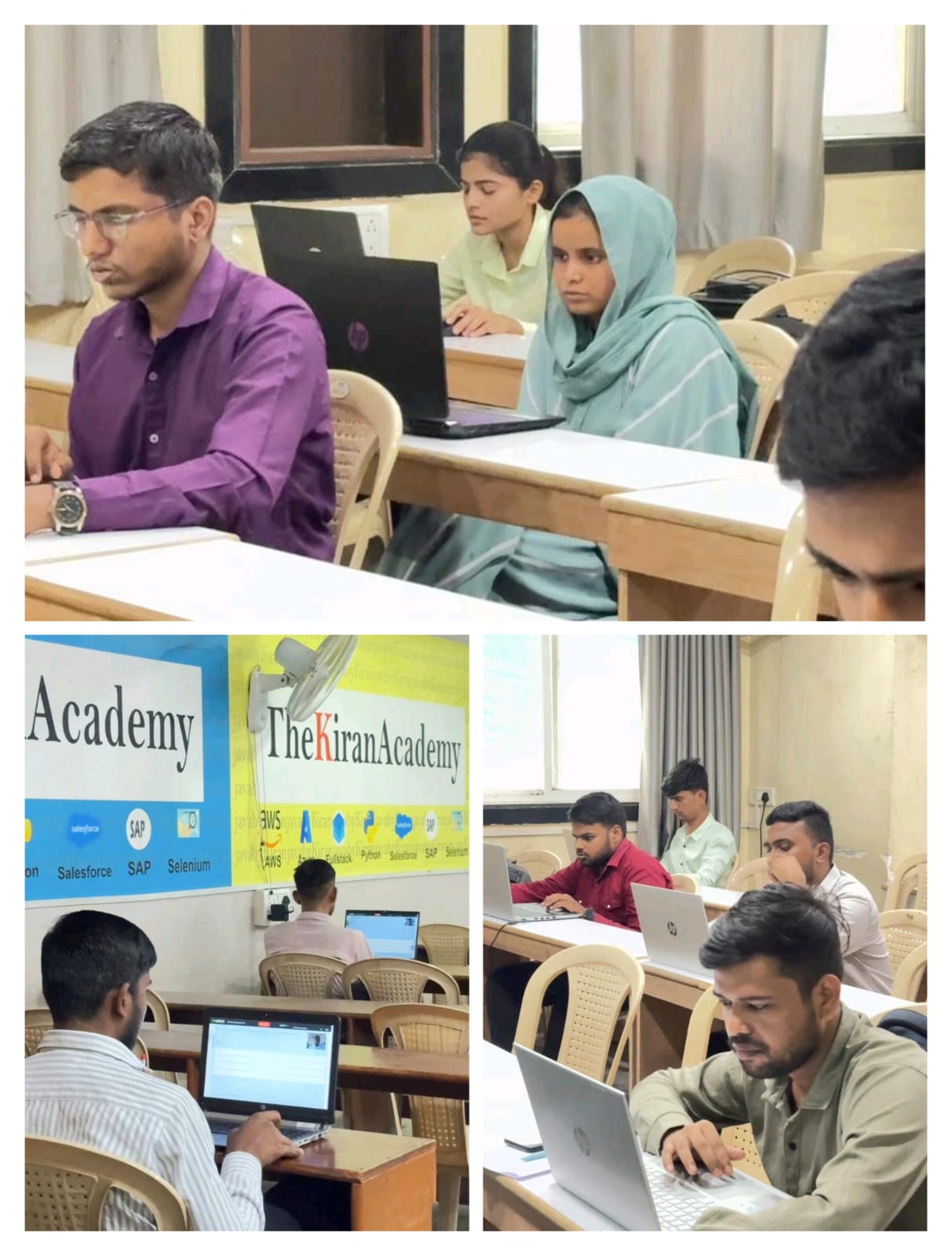
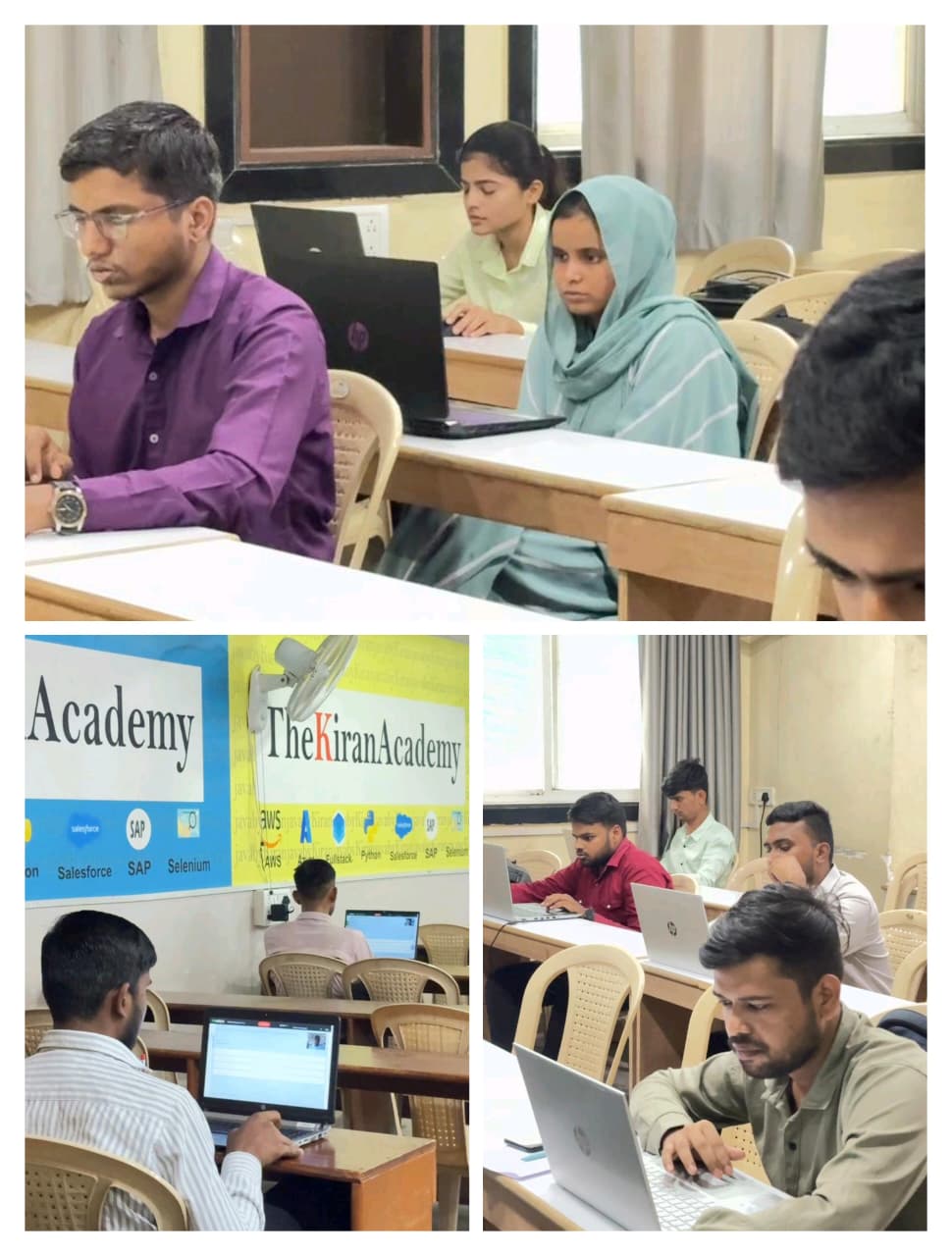
Learn Data Science at our Nagpur branch
Real classrooms, real trainers — walk in for a free demo class and see a batch in action.
The Kiran Academy — Nagpur
📍 190/A, Mankapur Ring Rd, near Chatrapati Hall, Chatrapati Nagar, Nagpur, Maharashtra 440015
📞 +919529204783
Every batch at the Nagpur branch is taught by Kiran sir's hand-picked senior industry faculty — working professionals who train for Data Science interviews, not just the syllabus.

Roles Nagpur students can target
Entry-level roles connecting course skills to real interview opportunities — in Pune, Mumbai, Bangalore and remote.
Data Scientist
Machine Learning Engineer
Python Data Analyst
AI/ML Associate
BI Analyst
Junior Data Engineer
What you'll use in every class
Industry tools covered in training, projects, and placement preparation.
Data Science syllabus for Nagpur students
Each module builds toward projects, resume confidence, and interview answers.
Python Programming for Data Science
- Python syntax, variables, data types, operators, and control flow
- Functions, modules, packages, virtual environments, and pip
- OOP in Python — classes, inheritance, dunder methods, and decorators
- List comprehensions, generators, lambda, map, filter, and itertools
- File handling — reading CSV, JSON, and Excel for data loading
- Jupyter Notebook — running experiments, markdown, and sharing findings
Statistics & Probability for Data Analysis
- Descriptive statistics — mean, median, mode, variance, standard deviation
- Probability basics — distributions, Bayes theorem, and Central Limit Theorem
- Hypothesis testing — t-test, chi-square test, ANOVA, and p-value interpretation
- Correlation and covariance — understanding feature relationships
- Outlier detection and handling skewed or imbalanced data distributions
SQL for Data Scientists
- SELECT queries — filtering, ordering, grouping, and aggregate functions
- Joins — INNER, LEFT, RIGHT, FULL OUTER with real business datasets
- Subqueries, CTEs, and window functions — ROW_NUMBER, RANK, LAG, LEAD
- Data cleaning in SQL — handling NULLs, deduplication, and type casting
- Connecting MySQL to Python — feeding query results into Pandas DataFrames
Data Wrangling with Pandas & NumPy
- NumPy arrays — vectorized operations, broadcasting, and matrix arithmetic
- Pandas Series and DataFrames — loading, indexing, slicing, and filtering
- Data cleaning — handling missing values, duplicates, and inconsistent formats
- Merging, grouping, pivoting, and reshaping datasets for analysis
- Time series data — resampling, rolling windows, and date-based operations
Data Visualization & Exploratory Data Analysis
- Matplotlib — line, bar, scatter, histogram, subplots, and chart customization
- Seaborn — heatmaps, boxplots, pairplots, and statistical chart defaults
- Plotly — interactive charts and dashboards inside Jupyter Notebook
- EDA workflow — identifying patterns, outliers, correlations, and business questions
- Storytelling with data — presenting insights clearly to non-technical stakeholders
Machine Learning Algorithms & Projects
- Supervised learning — Linear Regression, Logistic Regression, Decision Trees
- Ensemble methods — Random Forest, Gradient Boosting, XGBoost
- Model evaluation — accuracy, precision, recall, F1-score, confusion matrix, ROC-AUC
- Feature engineering, selection, and hyperparameter tuning with GridSearchCV
- Unsupervised learning — K-Means clustering, PCA for dimensionality reduction
- Model saving with Pickle/Joblib and serving predictions via a Flask endpoint
Your first class is free.
Attend a demo session before you decide. No obligation, no fees — just learning.
Common doubts from Nagpur students
Short answers for course, placement, and project expectations.
Our Nagpur branch is at 190/A, Mankapur Ring Rd, near Chatrapati Hall, Chatrapati Nagar, Nagpur, Maharashtra 440015. Students also join us from Sadar, Dharampeth, Sitabuldi, Manish Nagar and nearby areas.
Morning, evening and weekend batches run at the Nagpur branch, with new batches starting every few weeks. Call +919529204783 for the current schedule or book a free demo class to visit the branch and meet the trainers.
Yes — demo classes are free, in the real classroom with the actual trainer. Fill the form on this page or call +919529204783 and we will book your seat in the next demo session.
The listed course starts with Python basics and progresses to statistics, SQL, analysis and machine learning. Beginners should be prepared to practise programming and quantitative reasoning. Confirm prerequisites and the pace of the current batch before enrolling.
Pay depends on the role, employer, location, experience and offer terms. A verified course-specific salary range is not currently published. Compare the compensation stated in current vacancies and written offers, including fixed pay, variable pay and any internship stipend.
Data science may suit beginners who enjoy programming, statistics and working with data. Start with Python, SQL and data analysis, then practise evaluating models and explaining results. Compare the prerequisites of advertised roles with your skills; some roles require experience or further study.
Data Analytics focuses on interpreting existing data using Excel, SQL, and Power BI to answer business questions and build dashboards. Data Science goes further — it involves building predictive models using Python, machine learning algorithms, and statistics to forecast outcomes and automate decisions. Choose Data Analytics for reporting roles; choose Data Science for ML and AI-related jobs.
Yes. You will build 4 portfolio-ready ML projects — telecom churn prediction, demand forecasting, loan default risk analysis, and hospital patient readmission model — across different domains so you can explain them confidently in any interview.
Check current vacancies for the role and the employer requirements in each listing. A verified employer-by-course hiring list is not currently published here. Ask for approved, current references before relying on a claimed hiring relationship; a company name alone is not evidence of an active vacancy.
Yes. Placement support includes resume preparation built around your ML projects, mock interviews for Python, SQL, statistics, and model explanation, GitHub portfolio setup, and dedicated placement calls with interview question preparation.
Interview invitations and job offers depend on open roles, employer eligibility requirements, project quality and interview performance. A verified course-specific hiring timeframe is not currently published. Use course completion to review your portfolio and application readiness rather than as a promised interview date.