Software Testing Classes in Karve Nagar, Pune
Manual + automation testing classes at our flagship Karve Nagar branch - with placement support
Learn software testing in a real classroom at Kashibai Navale Road, Karve Nagar. Manual testing, Selenium automation, TestNG, Jira and API testing taught with real QA workflows, plus mock interviews and placement support.
Why learn Software Testing at our Karve Nagar branch?
Classroom batches at our flagship Karve Nagar branch
Manual testing, Selenium automation, TestNG, Jira and API testing
One of the fastest routes into IT for non-programmers
Real QA workflows used by companies today
Mock interviews and resume sessions at the branch
Placement support until you are hired
Software Testing Training Options at Karve Nagar
Next batch starts Oct 2026 — online for Karve Nagar students, classroom at our Pune & Nagpur branches.
Live Online Classes
- Live online batches with the same Karve Nagar trainers
- Recorded lectures for revision
- Same placement support as classroom students
Karve Nagar, Pune Branch
- Classroom batches at the Karve Nagar flagship branch
- Morning, evening and weekend batch options
- Free demo class before you enrol
- Lab access and doubt-clearing sessions at the branch
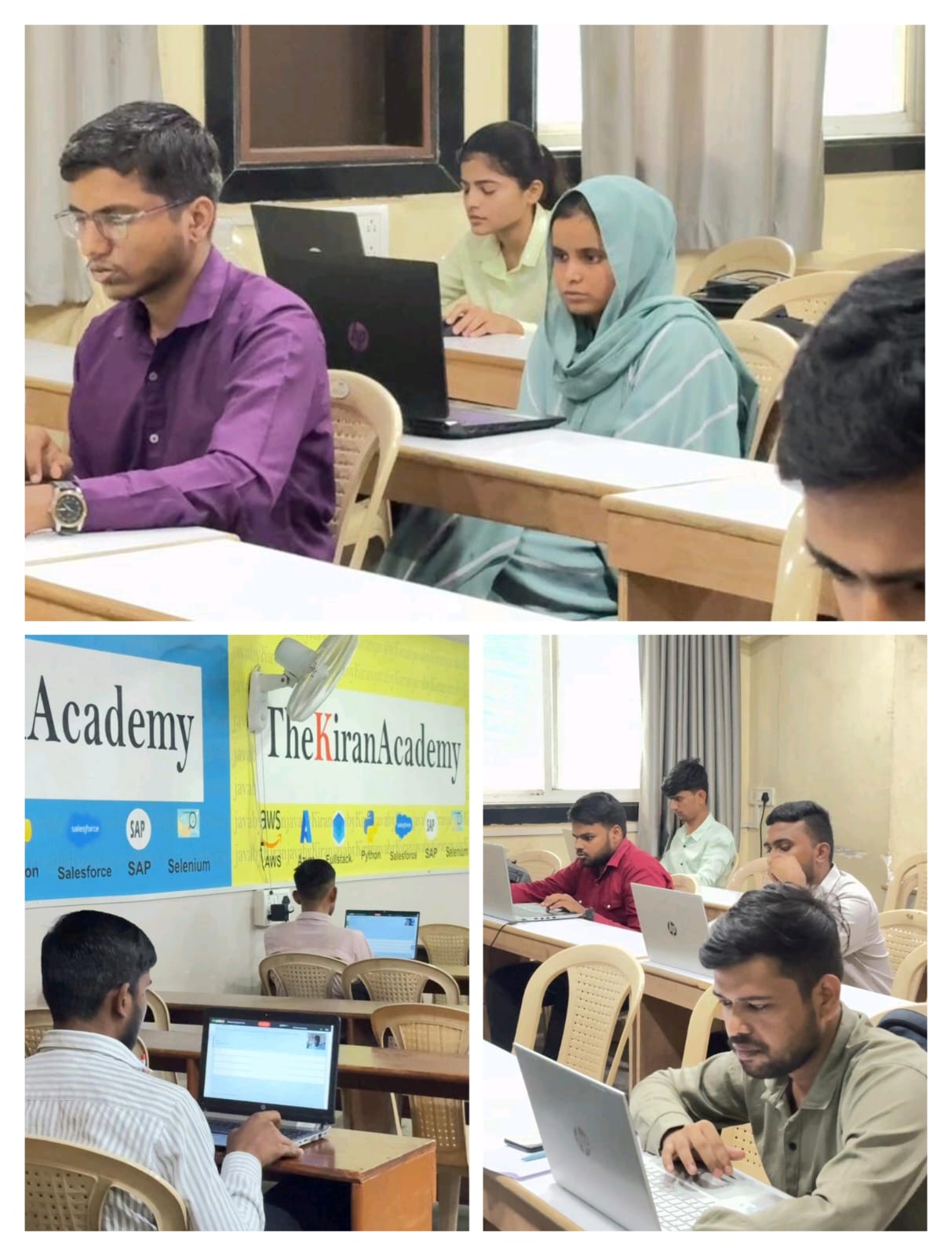
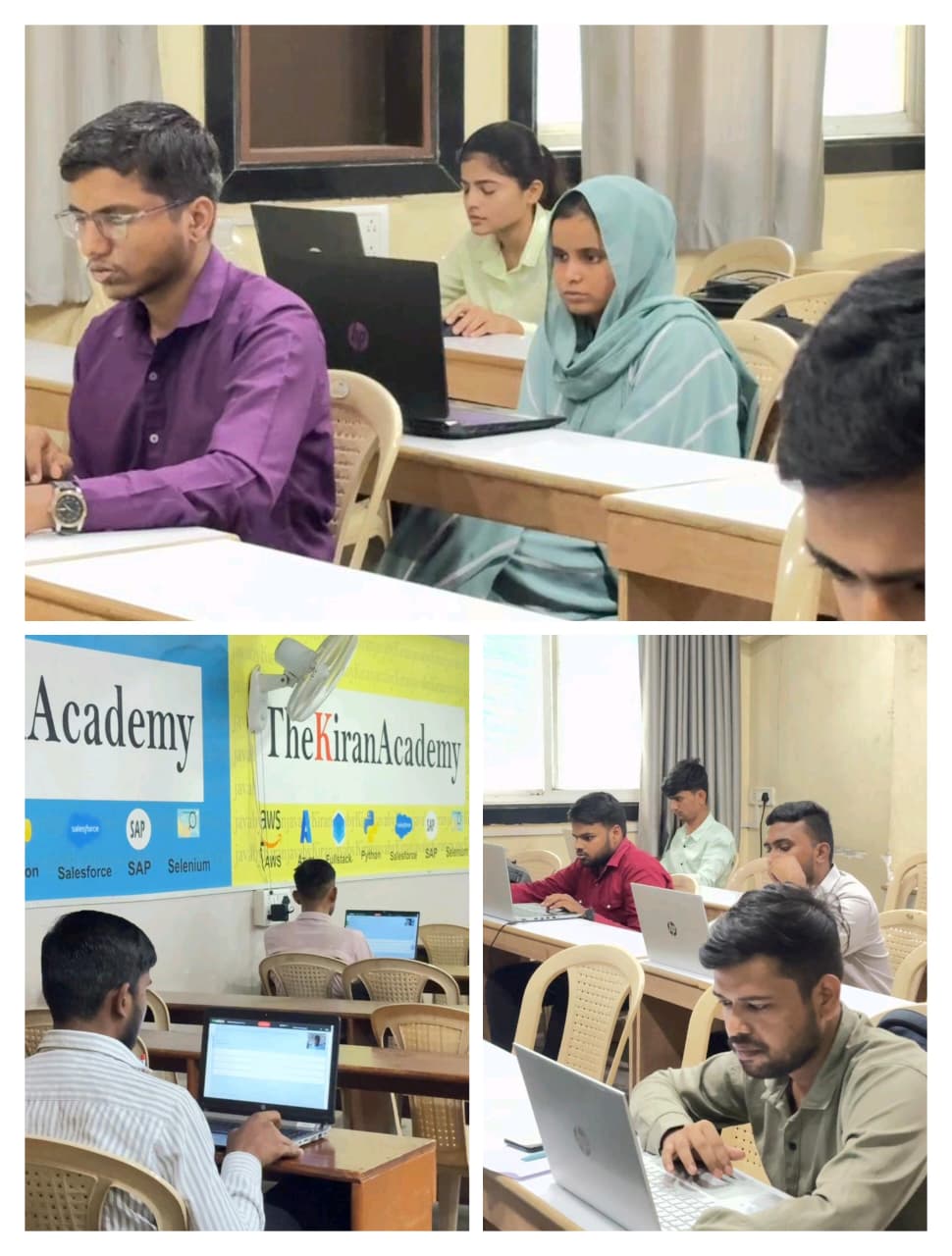
Learn Software Testing at our Karve Nagar, Pune branch
Real classrooms, real trainers — walk in for a free demo class and see a batch in action.
The Kiran Academy — Karve Nagar, Pune
📍 4th Floor, Park Plaza, above Birla Super Market, State Bank Nagar, Sramik Vasahat, Karvenagar, Pune, Maharashtra 411052
📞 +918888809416
Every batch at the Karve Nagar, Pune branch is taught by Kiran sir's hand-picked senior industry faculty — working professionals who train for Software Testing interviews, not just the syllabus.

What you'll use in every class
Industry tools covered in training, projects, and placement preparation.
Software Testing syllabus for Karve Nagar students
Each module builds toward projects, resume confidence, and interview answers.
Software Testing Fundamentals
- SDLC and STLC — roles and responsibilities of a QA tester
- Types of testing — functional, regression, smoke, sanity, UAT
- Test case design techniques — boundary value analysis, equivalence partitioning
- Bug lifecycle — logging, severity/priority, re-testing and closure
- Test planning, test estimation, and entry/exit criteria
Manual Testing in Depth
- Writing effective test cases, test scenarios, and test data
- Requirements traceability matrix (RTM) and test coverage
- Defect reporting in JIRA — fields, labels, attachments, and workflow
- Agile testing — sprint ceremonies, user story testing, exploratory testing
- Cross-browser and cross-device testing techniques
Core Java for Automation Testers
- Java syntax — variables, data types, operators, loops, conditionals
- OOP for automation — classes, objects, inheritance, interfaces
- Arrays, collections, and iterating test data sets
- Exception handling and file I/O for reading test data from Excel/CSV
- Maven project setup, pom.xml, and dependency management
Selenium WebDriver Automation
- Selenium WebDriver setup — ChromeDriver, Firefox, Edge configuration
- Locators — ID, name, CSS selector, XPath (absolute and relative)
- Handling waits — implicit, explicit, and fluent waits for dynamic elements
- Working with alerts, pop-ups, frames, windows, and web tables
- Page Object Model (POM) — clean, maintainable automation structure
TestNG & Automation Frameworks
- TestNG annotations — @Test, @BeforeMethod, @DataProvider, @Listeners
- Data-driven testing — parameterization with Excel using Apache POI
- Hybrid framework design — combining data-driven and POM patterns
- Extent Reports and Allure Reports for readable test reports
- Parallel execution with Selenium Grid and cross-browser runs
API Testing, Database & CI/CD Basics
- REST API testing with Postman — GET, POST, assertions, and collections
- API automation basics with RestAssured — validating status and response body
- Database testing — writing SQL queries to validate backend data
- Git and GitHub — version control for automation project collaboration
- Jenkins basics — triggering Selenium test suites automatically in CI pipeline
Your first class is free.
Attend a demo session before you decide. No obligation, no fees — just learning.
Common doubts from Karve Nagar students
Short answers for course, placement, and project expectations.
Our Karve Nagar, Pune branch is at 4th Floor, Park Plaza, above Birla Super Market, State Bank Nagar, Sramik Vasahat, Karvenagar, Pune, Maharashtra 411052. Students also join us from Kothrud, Warje, Erandwane, Sinhagad Road and nearby areas.
Morning, evening and weekend batches run at the Karve Nagar, Pune branch, with new batches starting every few weeks. Call +918888809416 for the current schedule or book a free demo class to visit the branch and meet the trainers.
Yes — demo classes are free, in the real classroom with the actual trainer. Fill the form on this page or call +918888809416 and we will book your seat in the next demo session.
Yes — software testing (QA) is one of the most stable and accessible IT careers. Every software product needs testers before release, which means demand is consistent across IT services, product companies, and startups. Automation testing (Selenium, Appium, RestAssured) has become a premium skill that commands higher salaries. Testing is also one of the best entry points for career switchers into IT.
Fresher manual testers in Pune typically start at ₹2.5 to ₹4 LPA. Freshers with automation skills (Selenium + Java, TestNG, API testing) command ₹3.5 to ₹6 LPA. With 1–2 years of automation testing experience, testers commonly reach ₹6–10 LPA. SDET (Software Development Engineer in Test) roles at product companies pay even higher.
Manual testing means a human tester executes test cases by hand — clicking through the app, checking functionality. Automation testing means writing code (usually Java with Selenium) to run test cases automatically. Manual testing is where most testers start. Automation testing is where the career grows — it is a mix of coding and testing. Our course covers both, progressing from manual to automation during the 4-month program.
Not for manual testing. Manual testing focuses on test case writing, bug reporting, SDLC/STLC processes, and tools like JIRA — no coding required. Automation testing requires learning Java programming to write Selenium test scripts. We teach Java from basics as part of the automation module, so students with zero programming background can still complete the full course and qualify for automation tester roles.
The Software Testing course at The Kiran Academy covers: JIRA (bug tracking), TestRail/Excel-based test case management, Selenium WebDriver with Java, TestNG framework, Maven for build management, Appium (mobile automation), Postman and RestAssured (API testing), SQL (database testing), Git and GitHub, and Jenkins (CI/CD basics). AI tools like ChatGPT are used for generating test cases faster.
Our testing students have been placed at Infosys, TCS, Wipro, Cognizant, Capgemini, LTIMindtree, Persistent, Hexaware, Mphasis, Tech Mahindra, Zensar, and 200+ more. Testing roles are available across all major IT services companies as well as product companies building SaaS, banking, healthcare, and e-commerce platforms.
Our Software Testing course is 4 months — covering manual testing, automation with Selenium and Java, API testing, and placement preparation. Most students receive their first offer within 6–10 weeks of course completion. Testing has one of the fastest time-to-placement among all IT roles, especially for freshers with a good understanding of STLC and Selenium automation.
QA (Quality Assurance) is the broader discipline of ensuring quality processes throughout the SDLC — test planning, process improvement, metrics. Testing is the specific activity of executing test cases and finding bugs. In industry, the terms are often used interchangeably. Most "QA jobs" involve both testing and some QA process work. Job titles include "QA Engineer", "Test Engineer", "SDET", and "Automation Tester".